Nigeria Spends Nearly $1bn Servicing Foreign Debt in Two Months

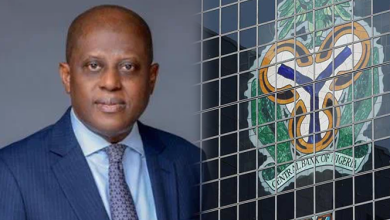
Nigeria spent nearly $1 billion servicing its foreign debt in the first two months of 2026, according to the Central Bank of Nigeria (CBN), as loan repayments and capital outflows increased.
The CBN’s February 2026 Economic Report showed that the country spent $440 million on external debt servicing in January and another $480 million in February, bringing the total amount paid within the two-month period to $920 million.
The report also revealed that total capital outflows rose from $1.63 billion in January to $2.75 billion in February, mainly due to increased capital transfers and higher loan repayments.
The apex bank explained that the rise was largely driven by capital transfers, which increased by 91.53 per cent to $2.26 billion. It added that loan repayments also increased during the period.
“The development was driven mainly by a 91.53 per cent increase in capital transfers to $2.26bn, relative to the level in the preceding month. Outflow through loan repayments also rose to $0.48bn from $0.44bn in January 2026,” the report stated.
The CBN further disclosed that capital transfers accounted for 82.18 per cent of total capital outflows in February, while loan repayments made up 17.45 per cent. Dividend repatriation accounted for the remaining share.
“In terms of share, capital transfers accounted for 82.18 per cent of total capital outflows, loan repayments (17.45 per cent), while repatriation of dividends constituted the balance,” the bank said.
Despite the increase in capital outflows, the CBN maintained that Nigeria’s external position remained strong during the review period, citing improvements in trade surplus, capital inflows and foreign reserves.
It said, “Despite heightened geopolitical risks and trade tensions, the external sector recorded a higher trade surplus and capital inflows, due largely to lower import bills and increased capital transfers.”
The report showed that Nigeria’s foreign reserves rose from $48.88 billion in January to $50.12 billion in February, providing an import cover of 9.61 months, well above the international benchmark of three months.
Meanwhile, the International Monetary Fund has projected that Nigeria’s public external debt will rise from $51.9 billion in 2025 to $72.6 billion by 2027, representing an increase of about 40 per cent within two years.
The Minister of Finance and Coordinating Minister of the Economy, Taiwo Oyedele, had recently defended government borrowing, arguing that the focus should be on how borrowed funds are used rather than the size of the debt.
“When analysts go on TV and join the populist view to accuse the government of borrowing, you are doing a disservice. The relevant question is never simply how much debt,” Oyedele said.
“It is always debt for what and at what cost, against what return, and repaid on what terms. A nation, a state, or a business that borrows to finance a productive asset generating returns above the cost of that capital is not behaving recklessly; it is behaving rationally.”